











The corset is a strange and complex garment. While many regard it as a tight fitting, uncomfortable nightmare, those who make and wear them in day to day life view them as simple support. Historically corsets were viewed as some might view a shoe in the modern day. Lots of people wear them and while sometimes uncomfortable, they really are just a basic, fundamental piece of clothing.
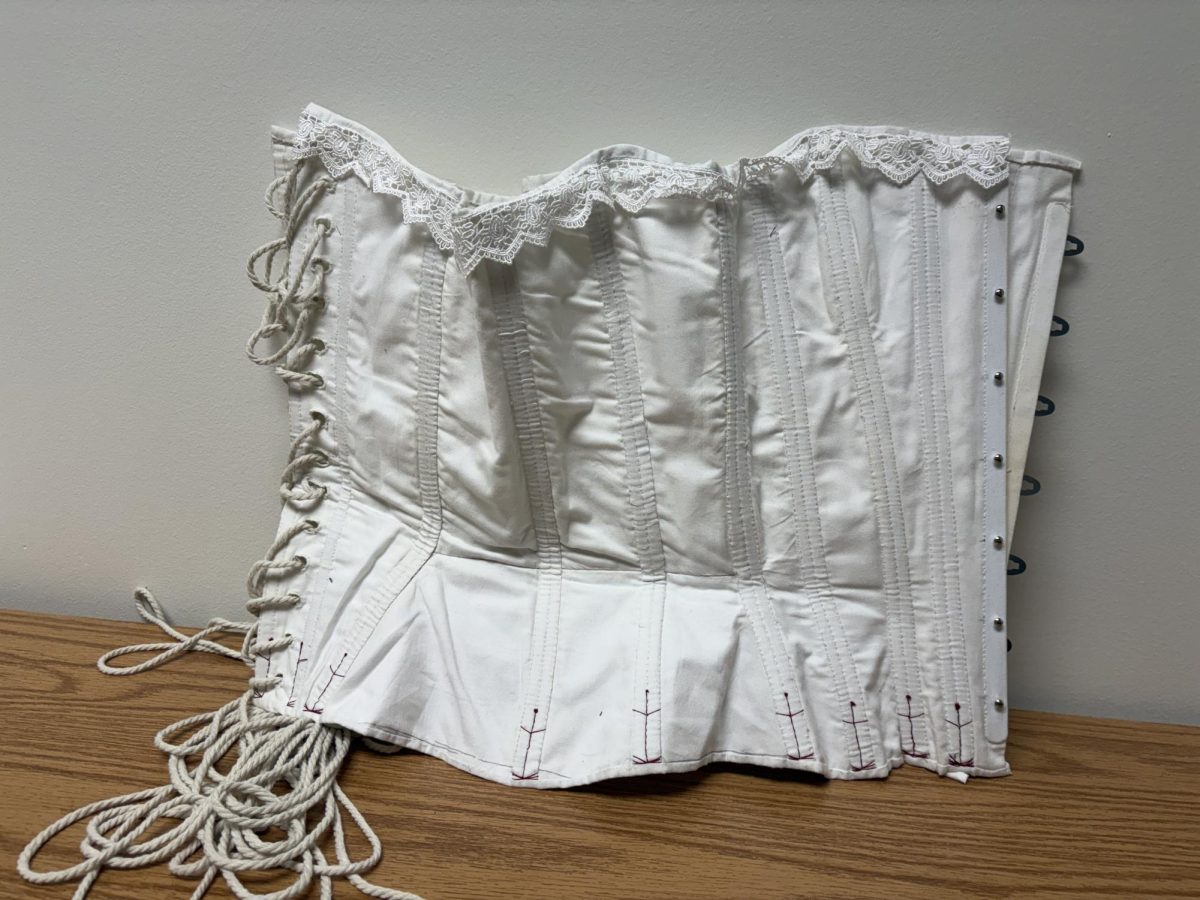
The first step to make a corset is choosing the right fabric. Corsets at the minimum only require one layer of fabric but can hold many layers of different types of fabric. The first essential layer for a supportive corset, is a nice thick, sturdy fabric, this first layer is typically a coutil, where the fabric is woven different from a typical fabric, in a coutil fabric the threads are woven in a fashion where they make up a subtle zigzag pattern. Typically this first layer is a supportive layer in which the structure is built into or on top of. (note that some corsets can be one layer made of a simple thin layer, however those corsets do less for support than a hard wearing fabric.) The second layer and typically the final layer for the corsets I have made in the past is the fashion layer made from a typically more expensive and fashionable material. If worn on the outside of clothes this is the layer that will be seen and will make up the boning channels and binding which I will discuss later. Many corsets also contain another layer in a lining layer that hides any interior mess made.
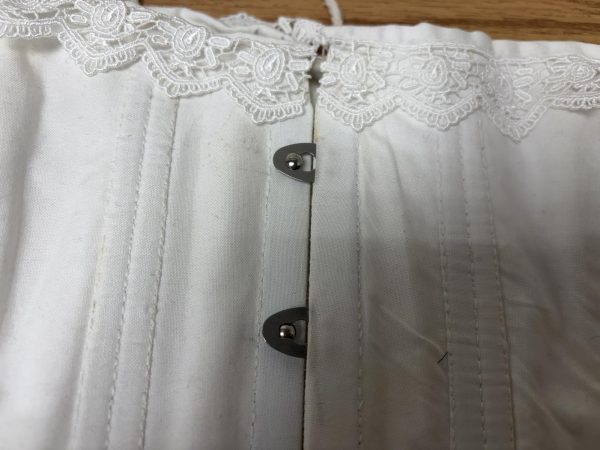
The front opening of the corset can be any number of closures from zippers to buttons but mainly the busk is the one I prefer to work with and was what was used historically. The busk is a piece of metal with one side that hooks onto the other, the busk is not strictly necessary and can be forgone in place of a joined front but it does make putting on the corset a much easier task.
The next part of the corset is what gives any corset any semblance of structure. Boning originally was made from a material called whalebone also known as baleen which came from the inside of a whales mouth and is made from keratin. It was a wonderful material to put in corsets as it bends into shape with heat and wear. Nowadays we use 2 main materials for corsets, steel and plastic. There can be any mix of steel and plastic in any given corset but I prefer to use plastic as it is more comfortable and can be easier to handle when creating a corset. The boning is put into boning channels which can be sewn into the corset in a multitude of ways.
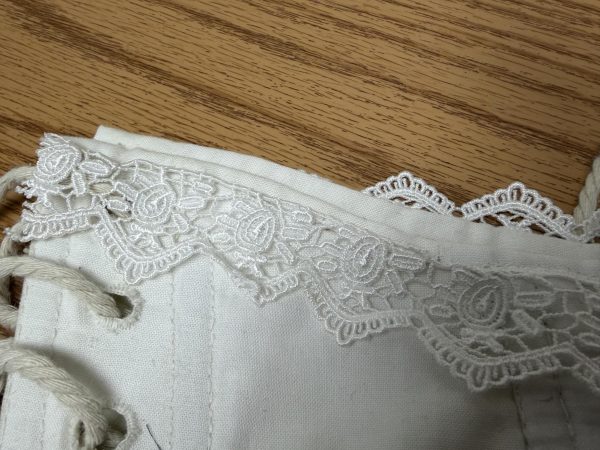
The next step in any corset is binding. Binding is a thin length of fabric that goes over the top and bottom of the corset to cleanly finish the edges. Binding is typically cut on the bias of the fabric which is diagonal through the fabric and gives the fabric a bit of stretch that makes it easier to get around complex curves.
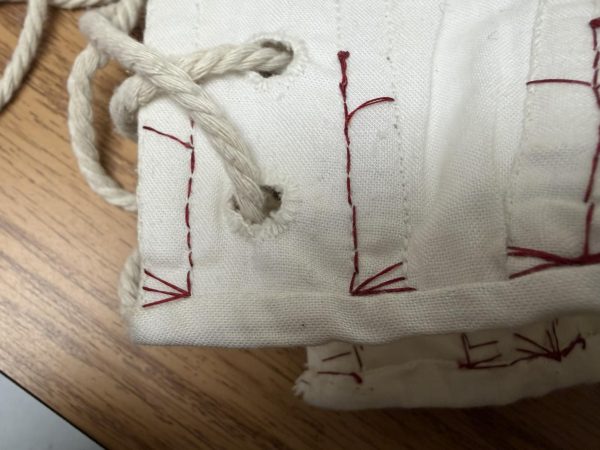
The final step is the grommets or eyelets. Grommets are pieces of metal put inside a hole cut in the fabric on the back panel and are the closure for the corset. An alternative for grommets are eyelets which are holes wherein the fabric threads are not broken by scissors but are alternatively pierced by an awl which is a pointed piece of metal that pulls the threads apart instead of breaking them. Grommets lead to a much stronger back and cause less breakage when pulled. The way the backs are connected is through lacing through the grommets in a specific pattern to make putting the corset on easily.
Corsets have been around for hundreds of years and are very difficult to make with all of the complex pieces put into them. But corsets have never had as much backlash as they do in the modern age with many people thinking they are harmful to people’s health, but historically people understood the benefits of wearing a corset. Corsets can be harmful if they are worn improperly, such as wearing them against the skin with no barrier between them. Corsets have been worn by women for centuries so before you decide that corsets are an unnecessary evil, maybe speak to the people who have worn actual corsets and try to understand their point of view.