




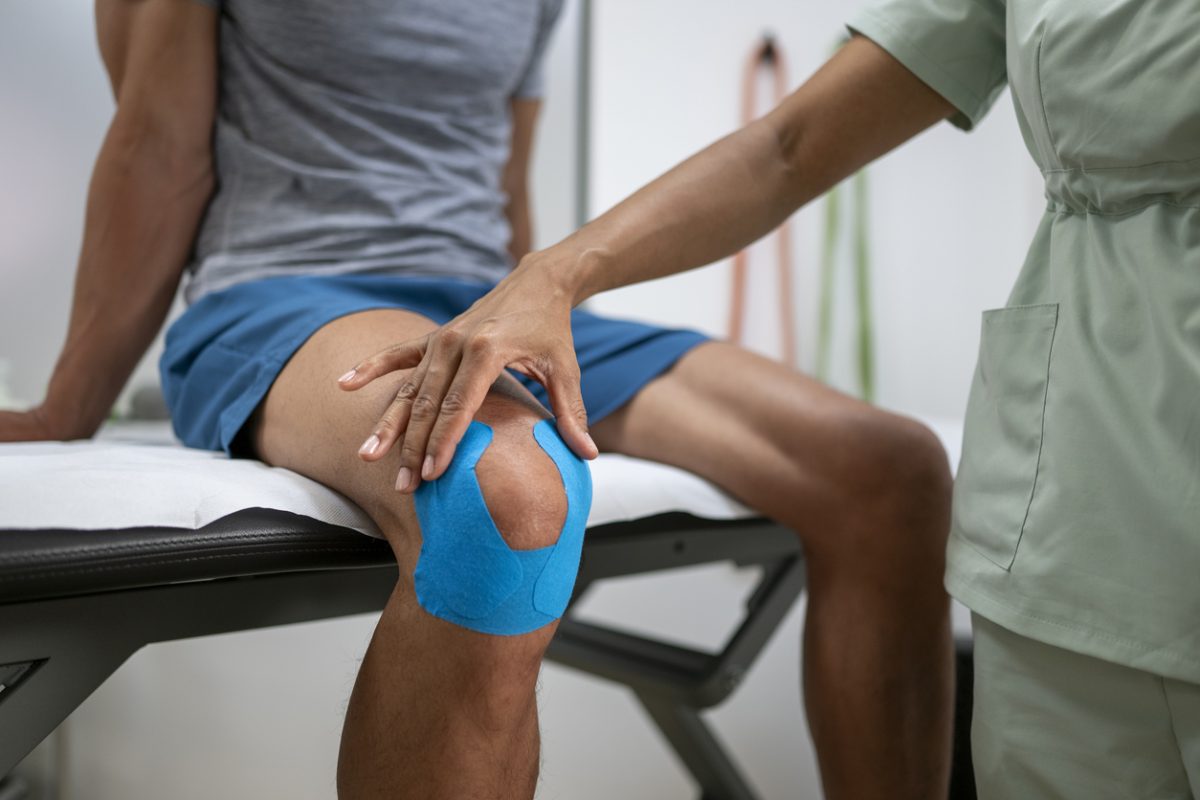















The Anterior Cruciate Ligament plays a key role in the knee’s function. It connects the femur to the tibia to help stabilize the knee. Unfortunately, ACL injuries are extremely common, making up 50% of all knee injuries.
“Research shows that female athletes in basketball and soccer are two to eight times more likely to sustain an ACL injury compared to their male counterparts,” said Tanner Buckard, author from the University of Alabama at Birmingham.
This is due to hormone changes relaxing the ligaments making them more susceptible to strains or tears. The increase of estrogen and progesterone during the first part of a woman’s menstrual cycle relaxes the ligaments, temporarily weakening them.
The majority of ACL injuries are non-contact, making them easier to prevent. The best way to do so is by strengthening the muscles around the joint as well as the ligaments themselves.
The athletic trainer here at New Hartford, Spencer Strife, recommends equal strength training between the hamstrings and quad muscles, balance exercises to improve stability from the ankle to the knee and hip, as well as proper warm ups and stretching before workouts. The FIFA11 protocol is a popular warm up for soccer as it supplies many dynamic stretches as well as exercises to activate the muscles before competition.
Here are a few exercises that target knee strength and stability:
Terminal Knee Extensions: TKE’s focus on straightening the knee in the last 30 degrees of motion against resistance. They work for rehab, prehab, and as a warm-up. To set up a TKE, tie a resistance band around a post and step into it with one leg so that the knee is being pulled forward. Then slowly straighten the knee against the band, pausing at full extension. (insert image)
Single Leg Russian Deadlifts: Single leg RDL’s help with unilateral balance while strengthening the hamstring muscle. These also work for prehab, rehab, and as a warm-up. To set these up, tie a resistance band around a post and step into it with one leg so that the band is pulling the knee outward. With this set up, complete a slow and controlled RDL focusing on balance. (insert image)
Step Ups/ Step Downs: These exercises can be completed in a variety of ways. They help to strengthen the quadricep muscles while maintaining balance. To set up step ups, find a box or step and slowly step up with one leg. You can do these facing the step or to the side. As your strength progresses you can raise the step higher. For step downs you can find a box or step and slowly lower yourself down with one leg. You can also raise the step higher as the exercise becomes easier. These also work for prehab, rehab, and as a warm-up.
Although they might feel like a waste of time, doing these few exercises a few times a week can save you from the grueling process of recovering from an intense knee injury. These exercises not only help to avert an injury but they can strengthen performance as well. Athletes with stronger and healthier joints are able to compete at a faster and higher level than those with unstable joints.
I can speak from experience when I say that these short exercises can save you in the long run. If I had focused on knee health a few years ago I would have saved myself nine months of physical therapy and a hefty medical bill. As much as the process taught me I wouldn’t recommend it. It has been over two years since my ACL reconstruction surgery and I still do these exercises weekly to prevent reinjury. It only takes about 15 minutes but it can save you in the long run.