
























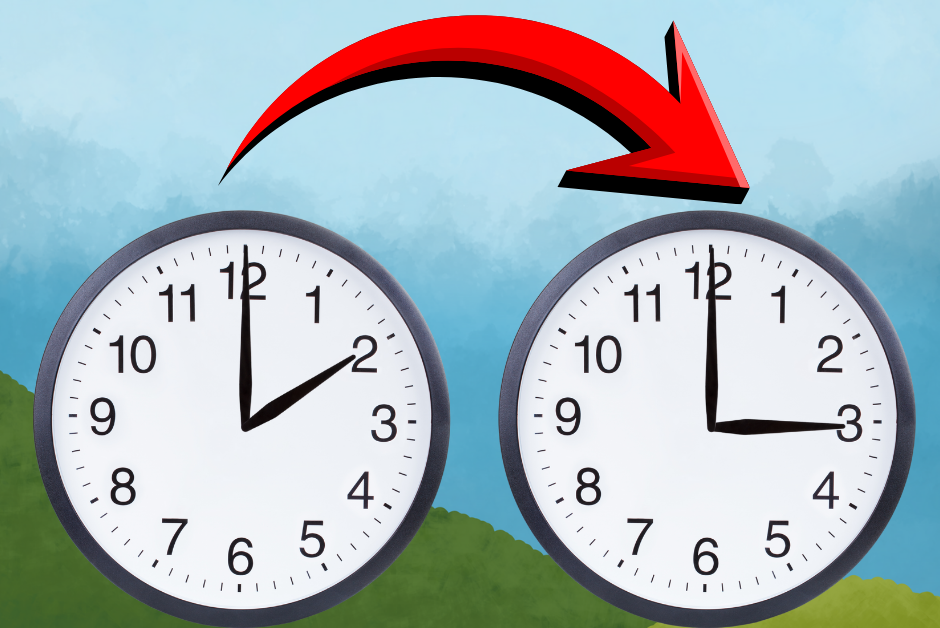
Yearly, Americans “spring ahead” and “fall back” in and out of Daylight Saving Time. While the shift may not seem like much, the change can have a lot of real consequences, like affecting sleep quality, people’s health, safety, and daily routines.
In the beginning, Daylight Saving Time was created to save energy by extending daylight into the evening when people could actually use it. However, today the effect it has on energy consumption is minimal, posing the question “Is it really worth keeping?”
While many enjoy the extra sunlight that Daylight Savings Time gives them in the summer, the “one-hour time shift in the spring results in less exposure to light in the morning and greater exposure to evening light” this throws off our circadian rhythm and naturally makes people want to get up and go to bed later. This comes with many side effects, like: worsened alertness, reaction time, and mood.
Research shows that the one hour shift can also be linked to many problems, like an increased rate of heart attacks, higher levels of anxiety and stress, and an increase in visits to the doctors in the days following the shift.
An effect of this can be seen on the road. Data shows that during the transition into daylight saving time there is an increase in car accidents, due to it being dark out during peoples morning commutes and an increased likelihood of sleep deprivation.
For many people, the shift in and out of Daylight Saving Time is more than just a time change; it disrupts the rhythm of their lives. From rushed mornings to changing bedtimes. It’s an unnecessary challenge that feels like it does more bad than good.
All of the research on increased accidents, disrupting sleep cycles, increased health risks, and the negligible effect it has on energy use makes it hard to find the place that Daylight Saving Time has in society today. The once practical strategy to help Americans get more time out of their days has turned into a disruption of daily life that leaves Americans feeling tired and stressed. This leaves only one conclusion for me; the costs outweigh the benefits and we need to stop “springing forward” and “falling back” and move on from the outdated system.