












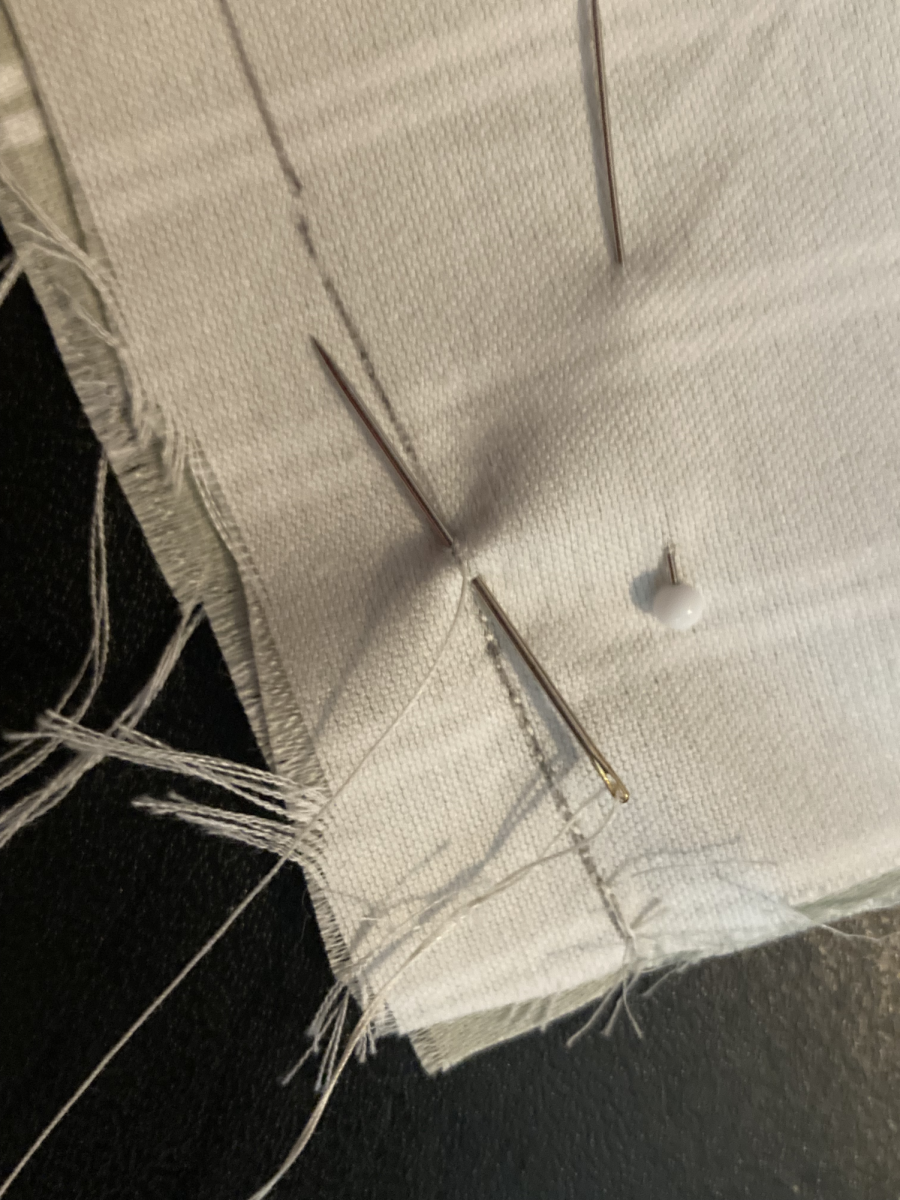
Threading a needle and putting it through cloth has been done since humanity was still in caves. But how are clothes really made? As someone who sews not by machine, but entirely by hand I have a special love for sewing by hand. It takes about twice as long but is ten times more rewarding than using a machine.
The very first step of sewing by any means is measuring and picking out a pattern. A pattern is a template for cutting pieces of fabric out to make a garment. Many sewists choose to purchase patterns from any number of different companies. There are hundreds of patterns that can be purchased in store and are put on large pieces of brown lightweight tissue paper, and can also be purchased online on sites such as etsy as a file that can be printed out at home and taped together and then cut out. But patterns can also be made from scratch or drafted from a typically older book. Pattern drafting is a skill not many people know but is important for anybody getting serious about sewing.
Before even picking out a fabric there are still many things to consider, like making sure your pattern fits. To do this you have to make something called a “muslin” otherwise known as a mockup. This is especially important when creating your own pattern as it has never been tested before. Patterns created by companies go through rigorous testing before going out to the market.
Now that you have a freshly chosen and tested pattern it’s time to pick out a fabric. There are many things to consider when picking out a suitable fabric for your pattern. On many commercial patterns there is a list of how much and what kinds of fabrics will be best suited for that pattern. There are a lot of characteristics to consider when choosing a fabric but to me the most important ones are drape, weave and feeling. Drape is a huge thing to consider for all garments. Drape is the way fabric falls and how it works in a 3D structure. For garments meant to fall like water a fabric with a lighter drape is the better option, and for a heavy garment like a coat or jacket choose a fabric that has a heavier drape. Weave is a bit less important than other qualities but is still vital when looking for the right fabric. Weave is the way that the thread of the cloth is made or woven into a fabric. There are two sides of a spectrum when choosing a weave, a tight weave or a loose weave. A loose weave is when the fibers of the cloth are not as close together as when in a tight weave and is better for lighter garments. Feeling the fabric is one of the most important factors to me when choosing a fabric, the feel of the fabric can make or break the garment.
Now that everything is gathered together and is ready to put together it’s time to cut out the pattern pieces. The first thing to ensure you have a nice crisp garment is to make sure that nobody ever touches your sewing scissors, to keep your lines neat and scissors sharp you have to never cut anything out with your scissors other than fabric.
Now it’s time to sew! The first step to sewing is to pin one thing at a time, go slowly and follow instructions online or given on the pattern. If you’re using a sewing machine then be careful not to pick up too much fabric at a time and go slowly. I however much prefer sewing by hand, I find it more relaxing and easier.
Now that you know the basics of sewing, why begin? Sewing is a lost art and many people don’t even know how to sew a button, but don’t feel bad if you don’t know your backstitch apart from a buttonhole stitch, there’s plenty of time to learn. The very best part of sewing is after days or maybe even months of working on one project getting to say, even just to yourself “I made this.”