



















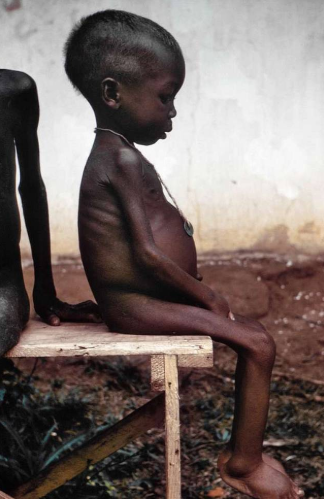





Recently I’ve been thinking about Famine, Affluence, and Morality by Peter Singer, a short article discussing his philosophies about charity. The argument made by Singer is that you are morally obligated to save a child drowning in a fountain while ruining your new clothes, and that if you have the ability to save someone far away you are also morally obligated to do so. Therefore, instead of buying something that you don’t need: new clothes, new shoes, a senior trip ticket… you should instead donate that money to charities that save people like the UN World Food Programme. There’s always going to be some disaster in the world that would cause lots of death by starvation, and that starvation can be avoided. The supply of food is enough to feed all of the people that are affected by disasters. Right now, there are wars going on, people leaving their homes and supply lines being cut, causing starvation. This asks the question: is the need for money so important that you can forgo human lives?
April 14, 2026, an accident occurred decently far from the school on the highway. I reasoned that if this person were to die, there would be one less person wanting objects which would be a slight decrease in demand, causing the price of things he/she demanded— such as food, housing, gas, any sort of scholarship— to decrease. Someone completely unrelated to me dying is optimal for my chances of success. If they were a student, that directly benefits me, you and anyone directly influenced. If they were a parent, that would negatively impact the child who could possibly be a student. In today’s day and age of competition, this is the reality.
To further this point, say America turned into a dictatorship and has an overpopulation problem in the year 2060 and needs to kill 96% of the population. You send your application of life, so does everyone else. In a disaster that would double your chances by eliminating the competition, would you choose to help the people needing disaster relief? The people out there dying of starvation are most likely completely unrelated to you.
In another analogy provided by Henry Shupp, imagine you are on a small boat and you see bundles of children drowning in the water. There are yachts floating along almost empty and smaller rafts. You could pick up every single child but that would sink the ship because the maximum occupancy is 10. Shupp voiced the very reasonable idea that you can only save so many people on your small boat, while the people in the yachts are having the easiest time.
There are few things we can do as individuals without yachts, but simply saving a few children instead of none is still substantial even though others can do more. Unfortunately, convincing the people on yachts that saving children is worthwhile is ineffective as they have already made their stance clear as material possessions bring great joy. This is not the joy that comes from extreme hard work or some great chance incident that allows you to greatly improve society around you. This is the simple joy of buying something completely unnecessary like a hoverboard. According to the WFP, each meal costs $0.43. Assuming 1 meal a day for one person because of dire circumstances, it amounts to $170 to feed a person for a year accounting for inflation. It’s true that today’s billionaires can band together and use less than 5% of their net worth to solve world hunger, but they don’t care about people starving. However, you, if you care, have the ability to make a difference as even though $170 is not a small amount, that senior class trip is still $150! You could still feel that person for a majority of the year or save hundreds of people for a day! Does your state of happiness for one day equate to hundreds of lives that are saved for a day? Maybe, after all, in Rome they let Christians get eaten by lions for entertainment.
Conversely, you can follow the path of billionaires, fully realizing that they can create a huge contribution saving millions of people, but choosing not to. By destroying empathy, they can invest and keep gaining materialistic pleasures. It’s obvious how the rich people affiliated with corporations around the world cause harm to the average person (list included at bottom of article). Billionaires do not care about human life because human life is expensive. The reason that you and I are alive is to provide for their industry in their eyes, and tossed away when we fail.
We are people, we are human, we have dreams, desires, pain, pleasure, love, torment, trauma and empathy. They are billionaires.
You can decide to forgo the pleasures brought by material objects and make the slightest difference in the world out there. It wouldn’t benefit you at all, in fact, it would most likely harm you. It would be an extremely small change in the world and of great cost to your happiness but there is still change. You can also decide to forgo your empathy, following the notion inside the constitution “Pursuit of happiness” (plagiarized from John Locke as we all know it was life, liberty and land) and abandon the suffering human lives as it is much better to invest in capital than to save people. But please, please do not be blind and make excuses to pretend that there is empathy in the people who are rich enough to make a major difference.
List of corporations/people that have been accused of causing harm to people to gain profit.
- Tobacco companies denying danger to profit
- Asbestos factory workers dying and corporations deny danger to make profit
- Radium watch companies denying danger to make profit
- Healthcare denying claims to make profit
- Oil companies denying danger of leaded gasoline to make a profit
- Companies denying danger of PFAS to make profit
- Elon Musk’s father’s Apartheid mine
- Banana corporations taking over the government in central America
- Legal tax evasion letting the ordinary people pay taxes instead of ultra rich
- Modern day slavery with cobalt mines to make profits
- Food companies using ultra processed food to make profit
- Corporations using bogus science to make profit
Dear reader, if you are still not convinced, please just google more instances, there are thousands of instances. If not, just find me and I can help you google.